


The AI app quota trap: how rigid credit limits are killing your build momentum

You are mid-build. The logic is finally coming together, the last three prompts solved a problem that had been stuck for an hour, and then a message appears: you have reached your usage limit.
The session ends there. Not because the work is done, but because the meter ran out.
This is one of the most common ways an AI build stalls, and it has nothing to do with the quality of the idea or the skill of the builder. It is a function of how most AI coding tools price access to their own product.
What rigid credit limits actually do to a build
Credit limits do not just interrupt sessions. They change how people build.
Builders working under a tight quota start making smaller requests than the problem actually needs, because a large, ambitious prompt costs more credits than a cautious one. A feature that would take one well-scoped generation gets split into three or four smaller ones, each rationed to stay under the ceiling.
This breaks flow. Build momentum depends on being able to follow a problem through to its resolution in one sitting. When every prompt is shadowed by a running credit count, builders start optimising for credit conservation instead of for the application they are trying to ship. The work that gets built is shaped by the pricing model, not by what the product needs.
The interruption itself has a cost too. Coming back to a half-finished build after a quota reset means re-loading context, re-reading what was already done, and re-establishing the thread that was just lost. For a solo founder or a student working in short bursts between other commitments, that friction is often enough to stall the project entirely.
Why builders ration prompts instead of fixing the cause
The common response to running low on credits is to use them more carefully. Write tighter prompts. Batch requests. Save the harder problems for when the quota resets.
These habits treat the symptom. They do not address the fact that the tool was never designed around how long real builds actually take. A working MVP is rarely the product of ten clean prompts. It is the product of a hundred or more, most of them small corrections, refinements, and second attempts that only make sense once you see the first attempt fail.
Quota systems were built for a different kind of usage: short demos, single-feature experiments, casual testing. They were not built for the iterative, trial-and-error process that real software development is. Builders who are serious about shipping something are punished by a pricing structure designed for people who are not.
Why HyperDev was built around generous credits
When we built HyperDev, we set out to remove the blockers that keep builders from finishing what they start. Quota burnout was one of the clearest examples we saw across the industry, so generous free credits and instant credit top-ups were a deliberate design decision, not an afterthought bolted on to compete on price.
The reasoning is straightforward. Iteration is not a failure mode to be minimised. It is how software gets built. A platform that charges per attempt is, in effect, charging builders for learning what does not work on the way to what does. HyperDev's credit model is built around that reality instead of fighting it.
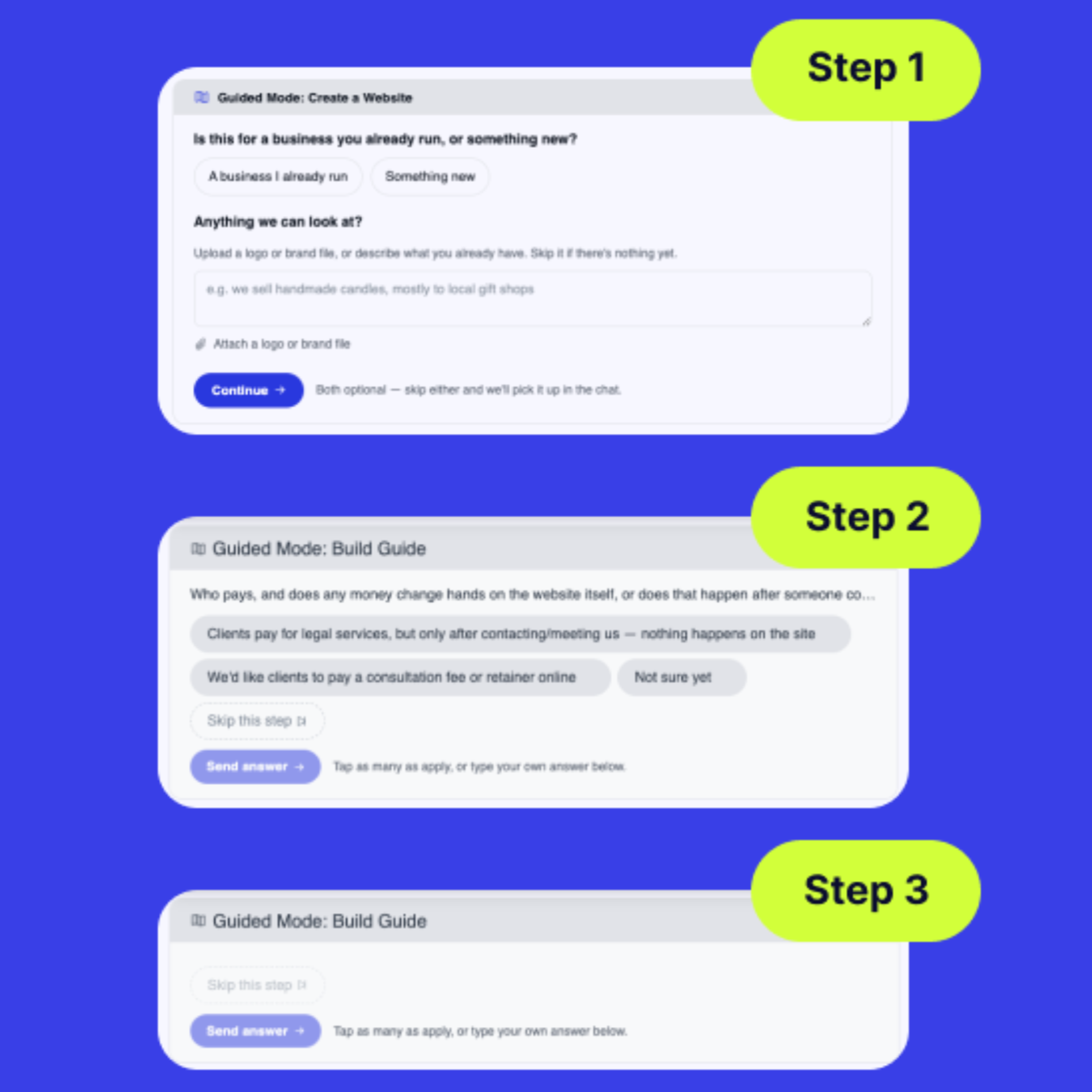
This connects to a wider part of how HyperDev works. Rather than asking a general-purpose LLM to reconstruct your application's logic from scratch on every generation, Guided Mode drives your session by suggesting granular changes in order to maximise the efficiency in reaching the goal of creating a high-quality application in the shortest time and lowest cost.
Fewer wasted generations mean the credits you do use go further on top of a quota that was never designed to run out in the middle of your build.
What this changes for builders
A build that does not get interrupted by its own pricing model is a build that is more likely to get finished. That is the real cost of quota burnout: not the credits themselves, but the projects that get abandoned mid-flow because the tool stopped being usable before the idea was fully built out.
Ready to build something that lasts?


.png)





%201.png)
